Three years ago the word did not exist. Today “neocloud” describes one of the fastest-growing categories in digital infrastructure—and a new class of tenant that data center operators across Southeast Asia are racing to accommodate. As Indonesian enterprises and the government push artificial intelligence from pilot to production, the providers renting out that raw computing power are reshaping what a data center in Jakarta is actually asked to deliver.
This article explains what a neocloud is, how it differs from the hyperscalers you already know, why the model is expanding so quickly, and why Indonesia specifically is becoming neocloud territory.
What Is a Neocloud?
A neocloud is a cloud provider built for one purpose: renting out GPU compute for artificial intelligence. Where a hyperscaler such as AWS, Azure, or Google Cloud offers hundreds of general-purpose services, a neocloud sells a single thing at scale—access to fleets of high-end graphics processors for training and running AI models, billed by the hour.
The category is sometimes called “GPU cloud” or “GPU-as-a-service” (GPUaaS), and the defining characteristics are consistent across providers:
- GPU-first fleets. Thousands of current-generation NVIDIA accelerators, wired together with high-bandwidth InfiniBand or RDMA networking so that a single large model can train across many machines at once.
- A thin, AI-optimized stack. Bare-metal or lightly virtualized environments tuned for machine learning, without the sprawling platform-and-software catalog of a traditional cloud.
- Faster access to scarce chips. For many AI teams, a neocloud is simply the only place they can actually get the newest GPUs, often at a lower price per GPU-hour than a hyperscaler charges.
- Capital-intensive economics. Providers buy or lease enormous quantities of hardware, secure power and space, and rent the capacity out—frequently financing the GPUs against the contracted revenue they generate.
CoreWeave, Lambda, Crusoe, and Nebius are among the best-known names internationally, and DataCenterDynamics’ dedicated neocloud coverage now tracks more than a hundred providers globally. The point is not any single company; it is that an entirely new layer of the cloud market has formed in under half a decade.
How Neoclouds Differ From Hyperscalers
The simplest way to understand a neocloud is by contrast. A hyperscaler is a supermarket—breadth, general-purpose services, and a global platform. A neocloud is a specialist supplier that does one job exceptionally well.
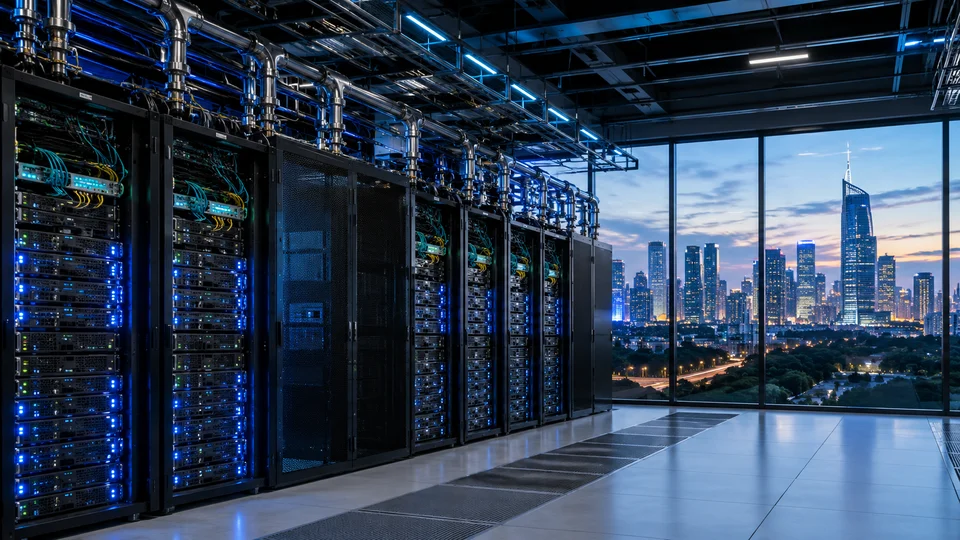
That specialization shows up in the hardware. A general-purpose cloud region is optimized for a mix of web servers, databases, and storage. A neocloud environment looks more like the dense, power-hungry, tightly interconnected halls described in a tour of what actually sits inside an AI data center—racks drawing many times the power of a conventional deployment, engineered around the thermal and networking demands of clustered GPUs rather than the modest footprint of standard enterprise IT.
The Business Model—and Where Colocation Fits
Here is the part that matters most for anyone operating infrastructure in Indonesia: a neocloud does not necessarily own buildings.
Some neoclouds are vertically integrated, owning land, power connections, facilities, and hardware. But a large share follow a leaner path—they own the GPUs and the software layer that customers rent, and they place that hardware inside someone else’s data center. That someone is a carrier-neutral colocation operator.
This is a deliberate division of labor. Building and powering a data center is slow, capital-heavy, and specialized work; buying GPUs and selling AI compute is a different business moving at a different speed. By hosting their fleets in carrier-neutral colocation space, neoclouds scale in months rather than years and avoid sinking capital into concrete and switchgear. In this arrangement the colocation operator is the infrastructure layer beneath the neocloud—supplying the power, cooling, and connectivity that the GPU business runs on.
Why Neoclouds Are Expanding So Fast
Two forces are driving the surge. The first is demand: the appetite for AI training and inference capacity has outrun what hyperscalers can provision, and enterprises want alternatives to a small number of dominant clouds.
The second is energy, and the numbers are stark. The IEA’s Electricity 2026 analysis projects that global data center electricity consumption will roughly double by 2030, with AI-accelerated servers the dominant driver of that growth. Neoclouds exist precisely to concentrate and monetize that accelerated-compute demand—which also means they concentrate its power and cooling requirements into the facilities that host them.
What a Neocloud Demands From a Data Center
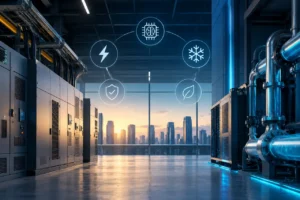
A neocloud is not a conventional colocation tenant, and it does not want a conventional rack. Hosting one well requires a facility engineered for AI density on several fronts:
- Power density. GPU clusters draw far more per rack than traditional enterprise workloads, so the facility must deliver high, sustained power to a concentrated footprint rather than spreading modest loads across a hall.
- Advanced cooling. Air alone cannot remove the heat that dense GPU racks generate. Liquid cooling has moved from optional to expected, part of the shift documented in the wider data center cooling revolution now reshaping facility design.
- Low-latency interconnection. Neoclouds and their customers need fast, direct paths to networks, other clouds, and end users. Rich interconnection—domestic peering through an exchange such as EPIX—is what turns a room full of GPUs into a usable regional service rather than an isolated island of compute.
An operator that offers only standard-density colocation cannot host a serious neocloud. The requirements are a different class of infrastructure.
Why Indonesia Is Becoming Neocloud Territory
Two conditions make Indonesia distinctly attractive for neocloud capacity.
The first is regulation. Indonesia’s data-protection and localization rules mean that a growing set of workloads—and the AI models trained on the data behind them—must run inside the country. Compliance with Indonesia’s Personal Data Protection Law turns “where the GPUs physically sit” into a legal question, not merely a performance one, and that pushes AI compute onshore. The result is domestic demand for sovereign, in-country GPU capacity that a foreign region cannot satisfy.
The second is the country’s own AI ambition. National-scale “sovereign AI” initiatives—domestic GPU platforms serving Indonesian language, government, and enterprise use cases—are, in practice, neoclouds by another name. They need the same dense, well-connected, in-country facilities. At the same time, international neoclouds scanning Southeast Asia for capacity find in Jakarta a large domestic market, improving connectivity, and colocation operators equipped for high-density AI hosting.
Put together, the regulatory pull and the sovereign-AI push mean the neocloud model is not something arriving in Indonesia later. It is forming here now.
Conclusion
A neocloud is the specialized engine of the AI era—a provider that rents GPU compute at scale and, in most cases, rents the physical home for that compute from a colocation operator. Understanding the model matters because it reframes what a data center is for: no longer just a place to house enterprise servers, but the foundation layer beneath a fast-growing class of AI infrastructure businesses. In Indonesia, where localization law keeps AI compute onshore and national sovereign-AI programs are scaling, that foundation is being poured right now.
If your organization is building or hosting GPU capacity for AI, talk to the Digital Edge Indonesia team about high-density, liquid-cooling-ready colocation and low-latency interconnection engineered for neocloud workloads in Jakarta. Get in touch to discuss power density, cooling, and connectivity for your AI fleet.