When evaluating colocation data center facilities in Jakarta, organizations typically compare power capacity, cooling systems, physical security, and location. One factor that tends to get less attention—even though it directly impacts connectivity costs, flexibility, and long-term network resilience—is whether the facility is carrier-neutral.
This term often appears in industry marketing. However, an accurate understanding of its practical meaning, its implications for network architecture, and how to verify it, is rarely discussed in depth.
What Carrier-Neutral Actually Means
Operationally, a carrier-neutral data center is a facility that provides equal access to various network operators—domestic ISPs, international carriers, CDNs, and cloud on-ramp providers—to install infrastructure and offer services to tenants.
Facility revenue is focused on renting space, power, cooling, and interconnection, rather than pushing the use of specific network services. Tenants are free to choose, combine, or switch connectivity providers based on their own performance and cost needs.
It is important to note that in industry practice, carrier neutrality is not only determined by ownership structure, but primarily by operational and commercial models:
- No preferential treatment for specific operators
- Uniform cross-connect pricing and processes
- Open and standardized operator onboarding processes
This approach is what determines true network independence for colocation customers.
Network Ecosystem Effects: Why Network Density Matters
Facilities that consistently implement carrier neutrality tend to attract more network providers. Each additional operator increases the facility’s value for existing tenants—and vice versa—creating high network density.
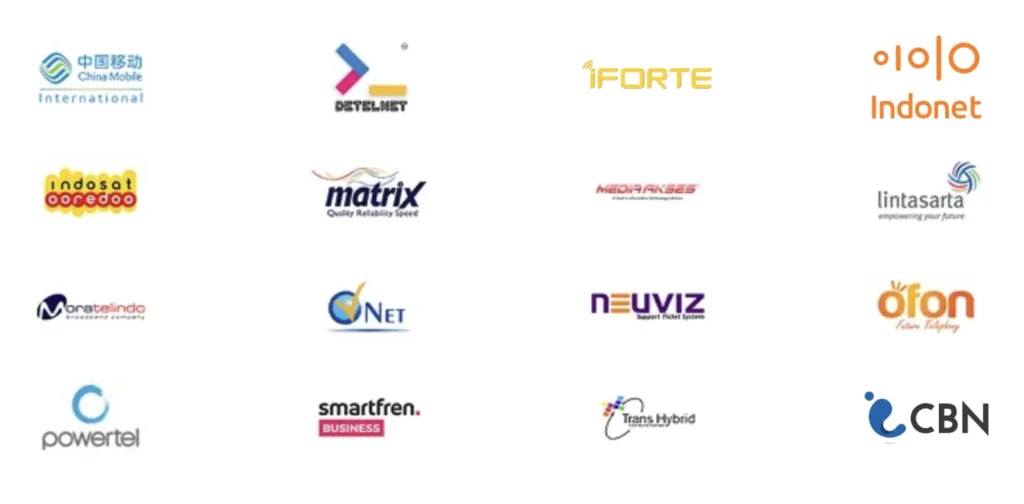
At the Digital Edge Indonesia Jakarta campus (EDGE1 and EDGE2), over 100+ network providers have deployed infrastructure, including:
- National and regional ISPs
- International carriers
- Global CDNs
- Direct cloud connectivity providers
This density gives tenants the ability to select providers based on price and performance, connect to multiple upstream paths simultaneously, and access cloud providers via private connections, all within the same physical location.
Four Practical Benefits of Carrier-Neutral Data Centers for Businesses
Redundancy without re-homing. Network redundancy through two upstream providers in the same data center requires both to be present in the facility. In a carrier-neutral building, this is very easy to do. In carrier-affiliated buildings, a second provider might not be available or may charge premium fees that make redundancy impractical. Carrier neutrality allows for true multi-provider resilience without having to move to a second physical location.
Competitive pricing. When multiple ISPs compete for the same pool of tenants within the same building, bandwidth pricing remains competitive. Tenants in a carrier-neutral facility can invite proposals from various providers and switch if there is a better deal—without having to change facilities. Over a multi-year contract, this bargaining power has a meaningful impact on connectivity costs.
Private interconnection via cross-connects. Two tenants in the same carrier-neutral building can establish a cross-connect—a dedicated physical fiber path between their equipment that entirely bypasses the public internet. Cloud providers deliver their on-ramp services this way: they install equipment in a carrier-neutral facility and offer private connectivity to tenants who request it. Cross-connects deliver lower, more consistent latency, eliminate exposure to public network instability, and typically reduce data transfer costs compared to internet-based cloud connectivity.
Peering access via Internet Exchanges. Carrier-neutral facilities often host or connect directly to public Internet Exchanges in Indonesia. An IX is a shared switching infrastructure where network operators exchange traffic directly, instead of routing it through third-party transit providers. Network peering via an IX reduces latency between peering members and typically costs less than equivalent capacity from an IP transit provider. EPIX, hosted at Digital Edge Indonesia’s Jakarta facilities, served peak traffic of 650 Gbps across over 15,000 route prefixes by late 2024 and is registered on PeeringDB. The advantage of private internet exchanges like EPIX is also a 99.9% SLA, ensuring guaranteed connectivity.
What to Verify When a Facility Claims Carrier Neutrality
When a data center declares itself carrier-neutral, tenants can verify this through several operational indicators:
- Operational and commercial models
Whether all network providers available at the facility have equal access and treatment regarding processes, commercial terms, and operational support. - Quantity and diversity of active operators
The presence of various types of network providers—domestic ISPs, international carriers, CDNs, and cloud connectivity providers—indicates an open interconnection ecosystem. - Cross-connect pricing and SLAs
Transparent pricing and consistent cross-connect service standards reflect an open and structured approach. - New operator provisioning time
Clear and measurable provisioning processes for additional network connections make it easier for tenants to adjust network architectures as business needs grow. - Presence of Internet Exchanges and cloud on-ramps
Access to Internet Exchanges and private cloud connectivity expands the interconnection options that tenants can leverage efficiently.
This approach helps tenants assess carrier neutrality based on operational practices and available ecosystems, rather than solely on structural factors, making it more relevant to long-term network needs.
Carrier Neutrality and Indonesia’s Data Sovereignty Requirements
Businesses operating under Indonesia’s data sovereignty framework—financial institutions regulated by OJK or personal data processors under the PDP Law—require infrastructure that supports true network independence. Regulatory mandates require data to remain within Indonesia’s borders; business needs dictate that network performance remains competitive.
Carrier-neutral colocation facilities in Jakarta satisfy both simultaneously. Data remains onshore inside a certified facility while the tenant retains full freedom to choose, combine, and switch between ISPs, international carriers, and cloud connectivity options. Carrier-affiliated facilities might meet geographical requirements while silently limiting the available network choices to meet those performance requirements.
Conclusion
Carrier neutrality is not just a marketing attribute. It is a structural characteristic that influences connectivity costs, redundancy design, and network adaptability throughout the life of a colocation contract.
In Jakarta, where data sovereignty and latency are equally critical, the network ecosystem within the data center is just as important as power and physical security.
To explore the carrier, peering, and cloud connectivity options available at Digital Edge Indonesia’s Jakarta facilities, please contact our team.